Three Years After October 7: What Comes Next In The Israel-Palestine Conflict?

New Delhi: Three years after the October 7 attack, there seems to be no political solution in sight for Israel and Palestine, Instead, a two-state solution for Palestine and Israel seems even further out of reach with a US-brokered peace plan stuck on the issue of Hamas disarmament.
The region has also changed in the past three years as conflicts have only expanded beyond Israel and Gaza. Israel's military campaign in Gaza, which started in 2023, extended to Lebanon and then to the 12-day Israel-Iran war in 2025. From there, the US got involved in a war with Iran in 2026 destabilising the entire region and engulfing parts of West Asia.
But the human cost of the Hamas attack and Israel's military campaign in Gaza remains high, with no side untouched. While 1,200 people were killed in the Hamas attack, the Israeli military assault following October 7 has led to the death of over 74,000 Palestinians.
Amid the human cost, multiple questions remain three years after the attack with elections in Israel dominated by whether October 7 failure could have been avoided, what is next for the Gaza Strip and the West Bank, and whether the two-state solution is dead.
Did Israel know about the plan?
Even three years after the attack, questions continue to swirl over whether Israel had prior warning about the October 7 Hamas attack.
The issue has gained new traction amid the ongoing parliamentary elections, with Netanyahu maintaining that security chiefs did not alert him. At the same time, the Prime Minister's opponents accuse him of failing to take responsibility and ignoring warnings, calling it the worst security failure in Israel's history.
The elections are being seen widely as a referendum on Israeli Prime Minister Benjamin Netanyahu. The debate in these elections is whether Israel, which is known for its security and intelligence apparatus, could have prevented October 7. On that day, Hamas mounted an attack on southern Israel in which about 1,200 people were killed and 251 others were taken hostage.
Reports from Israeli newspaper Haaretz and others alleged that United Arab Emirates President Sheikh Mohamed bin Zayed Al Nahyan warned Netanyahu about an impending Hamas operation over a week before the October 7 attack. But Netanyahu has denied the allegations even threatening a defamation case against Haaretz, a newspaper that has been critical of his policies, and other publications.
Instead, supporters maintain Netanyahu was not informed by his security chiefs. The issue has become a hot-button issue in the elections, where the October 7 attacks are playing a defining, central role in the elections
What next for Gaza and who will govern the territory?
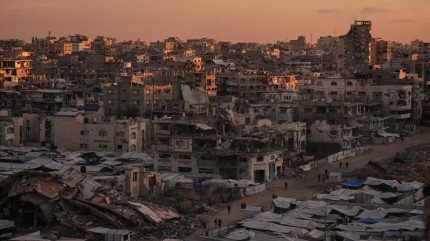
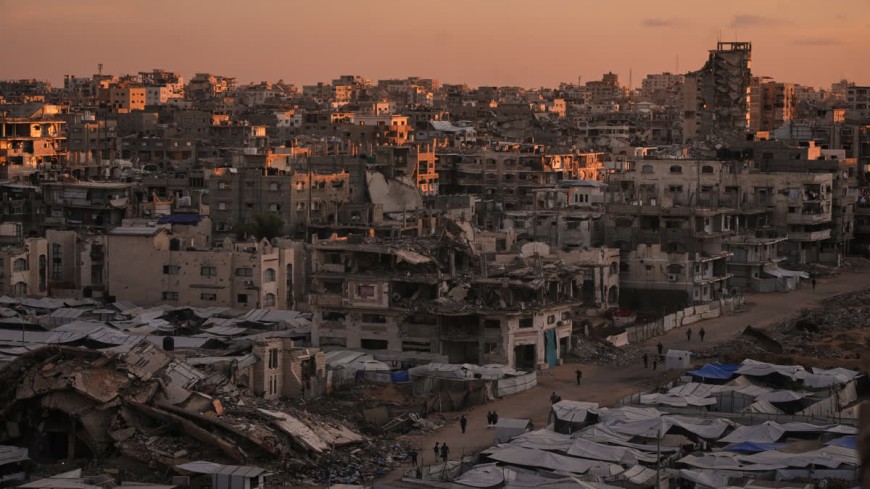
More than two million Palestinians live in Gaza where vast parts of the territory have been reduced to rubble. The UN said in a report that 94 per cent of Gaza's residents need shelter. It further noted that four out of five families face critical or catastrophic living conditions, lacking fuel, energy and essential household items. Education, healthcare and the economy have all become casualties of the war.
Even as people in Gaza struggle for the basics, the key question is who will govern the territory going forward and provide the basics to its residents? Under the Gaza Peace Plan unveiled on September 29, 2025 by US President Donald Trump, Gaza will be governed during its transitional phase by a temporary technocratic Palestinian committee.
This local committee, made up of qualified Palestinians and international experts, handles day-to-day public services under international supervision even as Hamas would be permanently excluded from governance. Oversight would remain with the Board of Peace, headed by Trump. The first phase of the Gaza peace plan, including hostage and prisoner exchanges and an initial ceasefire, has been accepted. But it is now stalled over the issue of Hamas disarmament. Hamas has accepted a phased roadmap to decommission heavy weapons but Israel has expressed serious concern. With Israel now focused on elections, any forward movement will likely happen after the elections.
Why are countries expressing concern over the developments in the West Bank?
As Gaza soldiers on, the West Bank has seen an increase in settler violence, which refers to property destruction, intimidation, and violence by Israeli settlers against Palestinians and their property in the West Bank.
The UN Human Rights Office said in July 2026 that Israeli settler violence in the occupied West Bank reached an all-time high. According to the UN's Humanitarian Office (OCHA), in the first eight months of this year, there were 1,623 settler attacks against Palestinians, while in 2025 there were 1,836
Between January 2023 and August 2026, there were 6,199 attacks by Israeli settlers causing casualties or damage. Netanyahu has condemned settler violence in the West Bank, while critics, including human rights groups, allege that settlers have the tacit support of the Israeli military. The military has denied these allegations.
Netanyahu has described attacks on Palestinian villages as the action of a “handful of rioters" and accused the media of ignoring attacks on Jewish Israelis while covering "a handful of juvenile delinquents, about 150 in number, who throw stones, who chop down olive trees, occasionally they light some fires."
But the issue of settler violence is turning out to be a diplomatic problem for Israel Eleven European countries and Canada have pushed for trade restrictions and import bans on goods originating from illegal West Bank settlements. The most notable is the United Kingdom which announced sweeping trade and human rights sanctions targeting illegal Israeli West Bank settlements. It has prohibited agricultural produce and cosmetics among others, from Israeli settlements in the West Bank.
As a result, the UK and Israel have become embroiled in a diplomatic and trade dispute. In September, Israel gave the UK 30 days, ending October 8, to close the British Consulate General in East Jerusalem even as it expelled British officials. The UK subsequently warned Israel it would expel one Israeli diplomat for every British diplomat.
What happens to the two-state solution?
Many countries, including India, and the United Nations believe a two-state solution is the only way forward. India has reiterated its longstanding support for a “negotiated two-state solution” in which Israel and Palestine live side by side in peace and security within recognised borders, consistent with international law.
But the push for a two-state solution, while distant even before October 7, now seems even more unattainable. According to a Gallup poll, 65 per cent in Israel and 58 per cent in the West Bank and East Jerusalem do not support the idea of a two-state solution. A majority of Israel's political leadership also opposes the two-state solution, seeing it as an existential threat to Israel.
For now, there seems little prospect for forward movement with much depending on what happens in the Israeli elections due to be held on October 27, to elect all 120 members of the 26th Knesset and determine the governing coalition.