Mumbai's BEST Is Set To Lose Rs 1,317.50 Crore

Mumbai: The Brihanmumbai Electric Supply and Transport (BEST), which supplies power and runs buses in Mumbai, on Wednesday projected an overall deficit of Rs 1,317.50 crore. According to the finances present, the projected income of BEST shown as Rs 8,559.06 crore against expenditure of Rs 9,876.56 crore, resulting in a deficit of Rs 1,317.50 crore.
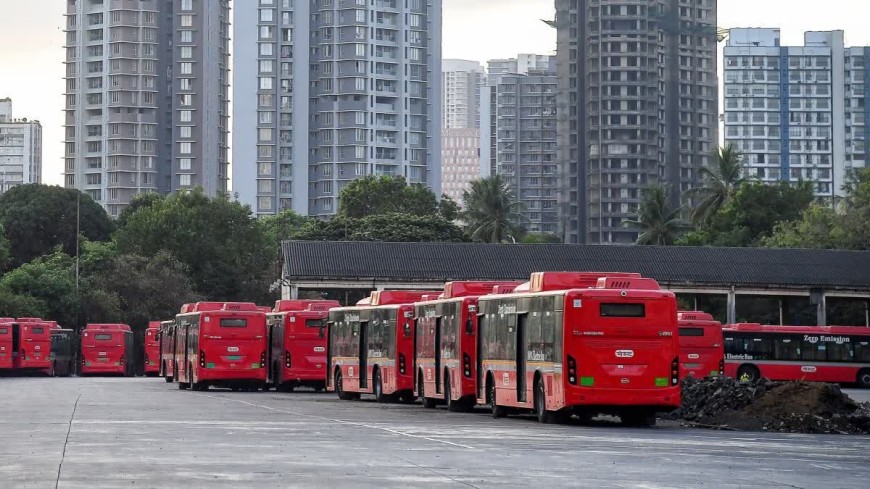
Yet again, the transport division is the loss-making division, which continues to be worrisome. It supplies electricity to about 10 lakh households in Mumbai and operates buses carrying nearly 25 lakh passengers daily across the city and suburbs. It has proposed several measures to expand and modernise its fleet and enhance passenger services.
BMC's Additional Commissioner (City) Prajakta Verma, holding the additional post of General Manager of BEST, presented the budget before the undertaking's committee with an estimated income of Rs 8,559.06 crore against expenditure of Rs 9,876.56 crore.
The accounts statement stated, as of September 2026, BEST had a fleet of 2,834 buses. The undertaking has proposed to expand the fleet in phases, initially to 4,016 buses and eventually to 10,000 buses in the total fleet.
Electric supply division
The undertaking planned major upgrades to its electricity distribution network under the Revamped Distribution Sector Scheme (RDSS). Under the stated proposed plans, the electricity supply division is estimated to post a surplus of Rs 201.21 crore, with income of Rs 5,007.51 crore against expenditure of Rs 4,806.30 crore, while the transport division is expected to report a deficit of Rs 1,518.71 crore, with income of Rs 3,551.55 crore and expenditure of Rs 5,070.26 crore.
On the electricity supply side, BEST has proposed strengthening its distribution network, replacing transformers and cables, and implementing advanced distribution management and IT/OT systems. The budget estimates also provide for Rs 647.79 crore in capital expenditure for 2027-28.
Transport division
According to the plans stated in the budget document, the electricity supply division of BEST is projected to post a surplus, while the transport division continues to run into deficit. The undertaking in its proposed statement wants to show a turnaround of the transport division earnings and earmarked many plans.
Under the fleet expansion proposal, 1,500 midi buses will be acquired through the Centre's PM-eDrive scheme, while tenders have been invited for 200 midi-CNG buses.
BEST transport division plans to continue the Integrated Transport Management System, including real-time bus tracking, upgraded passenger information and automatic vehicle location systems. They plan to have mobile-based ticketing, route and schedule management and a central command and control centre.
The expansion plans include QR-code-based ticketing for buses, as part of digital ticketing, through the ONDC network via platforms including Chartr, PhonePe, Paytm, WhatsApp, RedBus, Rapido and Namma Yatri.
BEST has also proposed introducing open-top double-decker buses for heritage and Hop-On Hop-Off tourist services, as are available in other prominent international cities. The heritage buses are reported to be popular with domestic tourists and international.
Prevention of accidents
BEST undertaking also proposes to modernise its fleet with advanced bus driving simulators to improve hazard perception, handling weather and enabling fuel‑efficient driving, all of which are aimed at reducing accidents after a recent spate of fatal BEST bus crashes.
The undertaking proposes setting up advanced bus driving simulators at the Dindoshi Training Centre to train drivers in hazard perception, difficult weather conditions and fuel-efficient driving, with the aim of reducing accidents. In the past few years, there have been cases reported of out-sourced private operators of being involved in some severe fatal crashes.
Lastly, the undertaking wants to take all precautions for any cyber attacks in future. The budget also proposes establishing a Security Operations Centre to monitor cyber threats and vulnerabilities, followed by steps towards obtaining ISO 27001 certification, the budget document pointed out.