India Has Only 7,500 Audiologists, Says CEO Of Company Promoting Remote Hearing Tests

New Delhi: The country has only 7,500 audiologists against a requirement of 85,000, estimates earKART Managing Director and CEO Rohit Misra.
Speaking to ETV Bharat at the recently held Emerging Science, Technology and Innovation Conclave (ESTIC) 2026, Misra said the shortage is driven partly by limited training capacity and the migration of experienced professionals to developed countries. He said India has only 88 colleges producing around 2,200 students annually in the field, while professionals with three to four years of experience often move abroad.
“There is a global shortage of audiologists,” Misra said, adding that countries such as Australia, the United States, the United Kingdom, Canada and New Zealand also face shortages and recruit trained professionals from India.
According to Misra, nearly 61 per cent of India's population does not have access to an audiologist, a gap he said has persisted for decades.
Remote Hearing Tests
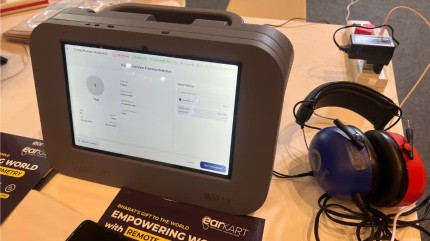
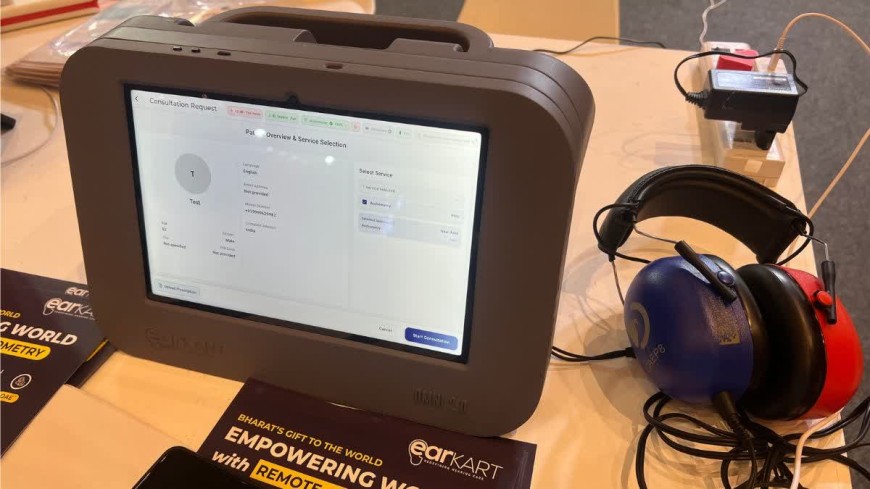
To address the access gap, earKART has developed OMNI, a remote hearing assessment and hearing-aid fitting platform that allows an audiologist to conduct tests from a distance.
The system can be placed at a primary health centre, an ENT clinic or another healthcare facility, while a specialist operates it through a live video call. This could allow patients in smaller towns and remote areas to undergo hearing assessments without requiring an audiologist to be physically present.
"An audiologist doesn't have to go to remote locations where sometimes they don't prefer to go," Misra said, explaining the need for a model that connects specialists with patients wherever internet connectivity is available.
OMNI supports air- and bone-conduction audiometry to assess hearing, tympanometry to examine middle-ear function, and video otoscopy to inspect the ear canal. It can also conduct newborn hearing screening using otoacoustic emissions and support hearing-aid fitting across brands, according to the company.
Misra said the technology is patented and has been deployed at AIIMS Delhi and other hospitals. The company has around 150 deployments and aims to expand to 2,000 locations across India.
Newborn Hearing Screening
One of the key applications of the technology is early hearing screening in newborns. Misra stressed that parents should not ignore possible signs of hearing difficulties in children or assume that delayed speech is simply a developmental variation.
"Parents should ensure that newborns undergo otoacoustic emission screening," he said, highlighting the importance of identifying hearing problems early and starting intervention promptly.
The Indian Academy of Paediatrics recommends that newborns undergo hearing screening before leaving the hospital. If a baby does not pass the initial screening, further testing and evaluation are required. Its guidance emphasises diagnosing hearing loss early and starting intervention before six months of age.
Early identification can help families access appropriate treatment, hearing aids, rehabilitation and speech-language support when needed. Delayed diagnosis, on the other hand, can affect a child's speech, language and communication development.
Non-invasive Testing
Misra said OMNI is not limited to newborns. Audiometry can be used to assess hearing across age groups, including children, adults and senior citizens.
The assessment uses headphones and a bone-conduction device placed behind the ear near the mastoid bone. Misra described the procedure as non-invasive and painless.
The technology is intended to make hearing assessment more accessible by allowing specialists to serve patients remotely, rather than requiring every patient to travel to a centre with an audiologist.
The wider challenge, however, extends beyond the availability of testing devices. Expanding access will also require affordable services, reliable connectivity, trained healthcare workers at testing locations and timely referrals for patients who need further evaluation or treatment.
For families, the central message is that suspected hearing difficulties should not be ignored. Early screening and appropriate follow-up can help ensure that children who need support receive it during the crucial years of language development.
Misra also highlighted the growing concern over hearing problems amid increasing exposure to noise pollution and the widespread use of earphones. He said the number of patients visiting for hearing-related issues has increased by around 30 per cent compared with 2016 figures. Prolonged exposure to loud sounds, whether from earphones or noisy surroundings, can damage hearing over time. He stressed the importance of being cautious about listening volume and exposure to loud noise while seeking timely evaluation if hearing difficulties arise.