Will Get Squadron Of Upgraded LCA Tejas Mark 1A This Fiscal: Air Force Chief

New Delhi:
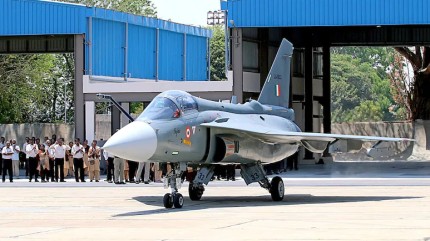
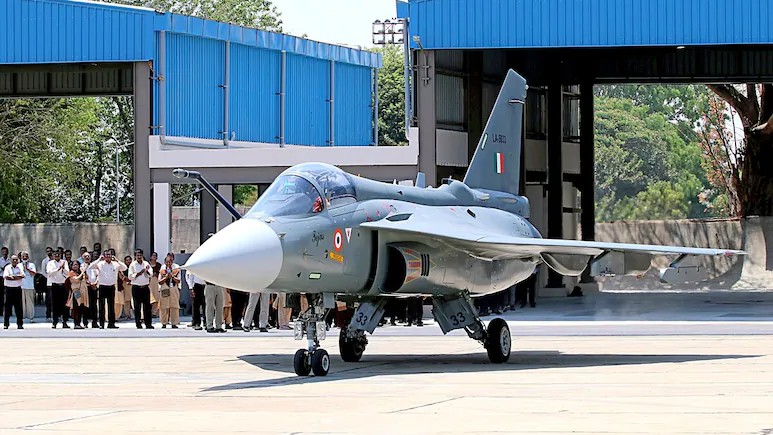
The Indian Air Force (IAF) will induct a full squadron of the homegrown Light Combat Aircraft (LCA) Tejas Mark 1A in the current financial year, Chief of the Air Staff Air Chief Marshal Ashutosh Dixit said today. This is a highly upgraded version of the 4.5-generation fighter jet.
He shared a timeline for India's combat fleet, saying the upgraded LCA Mark 2 is expected to roll out next year while development continues on the fifth-generation Advanced Medium Combat Aircraft (AMCA).
"Very shortly, we will have LCA Mark 1A joining the Indian Air Force. Within this financial year we will have a squadron. Now the time has come, we will be creating a squadron of LCA Mark 1A," Air Chief Marshal Dixit said at a security summit in Delhi.
He said the schedule for the Mark 1A variant had seen delays after initial evaluations of the baseline Tejas fighter jet revealed specific technical shortcomings. To resolve those issues, the IAF partnered with state-run Hindustan Aeronautics Ltd (HAL) and handed over an aircraft from its active inventory to serve as a testbed for the Mark 1A configuration.
"When we came to testing, we found that there were some shortfalls in the beginning in the LCA Tejas, the first flight which it had done and delivered," Air Chief Marshal Dixit said. "So we identified four areas which we need to improve, and then we said let's do it together with HAL. So that we have done, we have designed the aircraft, we gave them one LCA from our inventory and created LCA Mark 1A."
Work on those four modification areas is now nearly finished, he said.
The timeline had also stretched because engineers used the interim period to integrate new indigenous weapons developed by the Defence Research and Development Organisation (DRDO) and carry out extensive flight trials.
"Those four areas are almost complete. In between, DRDO had developed new weapons, we got them integrated, and we did a tremendous amount of flight tests. So this kept slipping in a manner of speaking because when you do a test you find some other area which you need to improve and you improve. So this kind of development we keep doing, and we are there now," the IAF chief said.
According to him, building a combat aircraft from scratch needs mastery across multiple scientific disciplines and this is a capability achieved by only a small group of nations. The Tejas project drew on a nationwide network of 600 to 700 work centres and laboratories, bringing together every Indian Institute of Technology (IIT), Council of Scientific and Industrial Research (CSIR) facilities, and railway laboratories.
"Every area of physics, chemistry, and whatever you have of the sciences, including life sciences, is utilised in developing an aircraft... It is a national effort," he said.
The technological breakthroughs achieved during the Tejas Mark 1A programme will feed directly into heavier and more advanced platforms, including manned-unmanned teaming (MUM-T) systems, advanced sensors and future stealth aircraft, Air Chief Marshal Dixit said.