Sensor That Detects Nerve Agent-Like Chemicals In Seconds

Nerve agents are highly toxic chemicals that can enter the body through breathing or skin contact and disrupt nerve signals. Sarin and tabun, for instance, have been used in wars as chemical weapons. Even tiny amounts of these chemicals can be lethal. Early detection can identify contaminated areas, protect emergency responders, and speed decontamination efforts. A nanozyme is a man-made material that mimics natural enzymes and speeds chemical reactions.
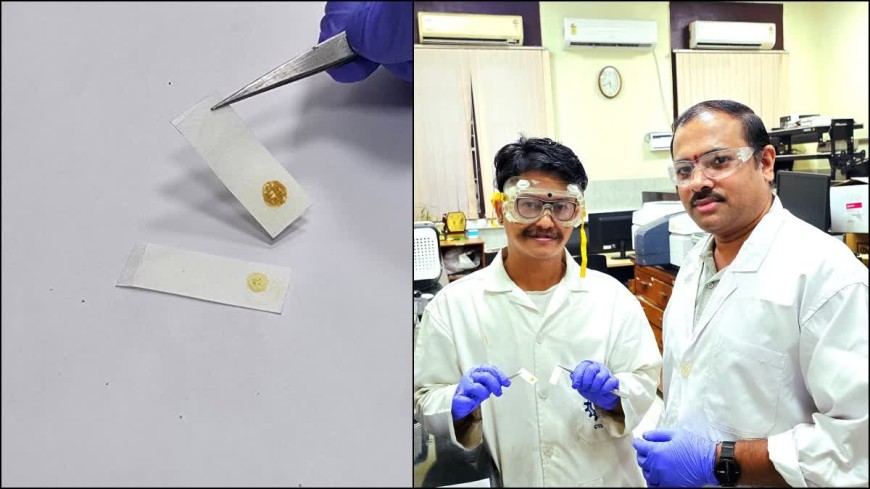
Researchers at CSIR-Central Leather Research Institute (CSIR-CLRI), Chennai, have developed a cerium-based nanozyme that can detect and help break down highly toxic nerve-agent-like chemicals within seconds. The study was published in the journal Chemistry – A European Journal. Huidrom Mangalsana, a research scholar, is the first author, with scientist Dr. Amit A. Vernekar as the corresponding author.
Sensor To Detect Hazardous Contamination
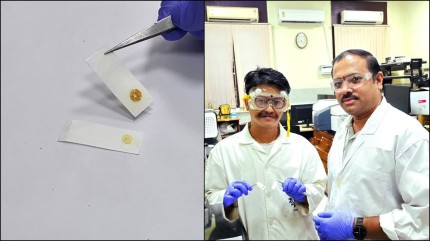
The paper-strip sensor detects chemical contamination on different surfaces and in hazardous environments, rather than exposure to the human body, enabling faster response. The sensor uses a cerium-based nanozyme made as a two-dimensional material with a large surface area. When a nerve-agent-like organophosphate comes into contact with it, the material breaks a specific chemical bond, helping to break down the compound while also signalling its presence. This gives the sensor a dual function.
Dr. Vernekar said in an interview that the team cannot test actual nerve agents such as sarin (a highly toxic nerve gas) because they are extremely dangerous and can only be handled by authorised organisations. Instead, the researchers use nerve-agent simulants, many of which are organophosphate pesticides or insecticides that act similarly on the body. These compounds inhibit acetylcholinesterase, an enzyme that helps transmit signals between nerves. When this enzyme is blocked, communication between the brain and muscles is disrupted, affecting vital functions such as breathing and potentially causing respiratory failure and paralysis.
This allows the researchers to test how the sensor responds to compounds that mimic nerve agents under controlled laboratory conditions.
How The Chemical Reaction Produces A Colour Change
Dr. Vernekar explained that the sensor works by breaking the phosphoester bond in paraoxon through a process called hydrolysis. This produces two products, one of which is p-nitrophenol. The hydrolysis reaction initially produces a yellow colour. After about 13 seconds, p-nitrophenol begins binding to the cerium sites in the nanozyme, causing the colour to shift towards orange. By about 35 seconds, the orange colour becomes clearly visible, confirming the reaction.
The distinct colour change is important because some conventional tests can produce similar yellow shades, making results harder to interpret.
Heat Speeds Up The Reaction
The entire process takes place at around 50°C, meaning a small amount of heat is required to accelerate the reaction. Without heating, the reaction still occurs but takes longer. The heat speeds up the reaction and cuts the detection time. Dr. Vernekar noted, “We also studied the catalytic activity and reaction kinetics of the sensor. The results showed that about 50% of the nerve-agent simulant could be decontaminated within six minutes.”
A smartphone camera can analyse the strip's colour using RGB values to estimate the amount of chemical present. The reported detection limit was as low as 1.29 micrograms, while the recently reported work in the journal RSC Sensors and Diagnostics has lowered the detection limit to 340 nanograms, with visual detection reported within five seconds in the improved version.
Measuring Different Contamination Levels
To understand how the sensor responds to different contamination levels, the team tested different amounts of the nerve-agent simulant, from zero to 25 micrograms. Since the test is based on a solid paper strip, the amount is expressed in micrograms rather than molarity. As the amount of chemical increases, the orange colour becomes deeper, producing corresponding changes in the smartphone-measured RGB values.
These readings are used to generate a calibration curve, which can help estimate the amount of the chemical present in an unknown sample.
Possible Uses Beyond Nerve-Agent Detection
The use of an organophosphate simulant is also relevant to public safety because organophosphate poisoning can occur through pesticide exposure, including agricultural incidents reported among farmers. The technology could therefore have potential applications beyond nerve-agent detection, although further testing would be needed to establish its effectiveness in real-world conditions.
Discussing existing detection methods, including spectrofluorometric and enzymatic methods, Dr. Vernekar said they have limitations. Enzymes are often unstable outside their natural biological environment and can be expensive to isolate and purify. Using a relatively inexpensive metal such as cerium to mimic enzyme-like activity could make the technology more economical and stable. Spectrofluorometric methods, meanwhile, require sophisticated laboratory equipment. The paper strip offers a simpler alternative: the visible colour change can be seen directly, allowing rapid detection without major equipment.
Still At The Lab Stage
The technology is still at the laboratory stage, with the team working to make the sensor more selective in detecting specific insecticides and pesticides and reusable before it can be developed for practical applications.
So far, five to six simulants have been screened, with about three showing the desired response. The strip is currently single-use; reusing it would require recovering the cerium-based material and reconstructing the sensor. The synthesis of the Ce-based nanozyme takes about 15-20 minutes, while casting the material onto the paper strip takes only one to two minutes. Further testing is needed before field use; actual nerve-agent testing requires collaboration with authorised defence organisations.