Pak Minister In Delhi Calls For Talks Via Culture, Joint Mechanism On Terror

New Delhi:
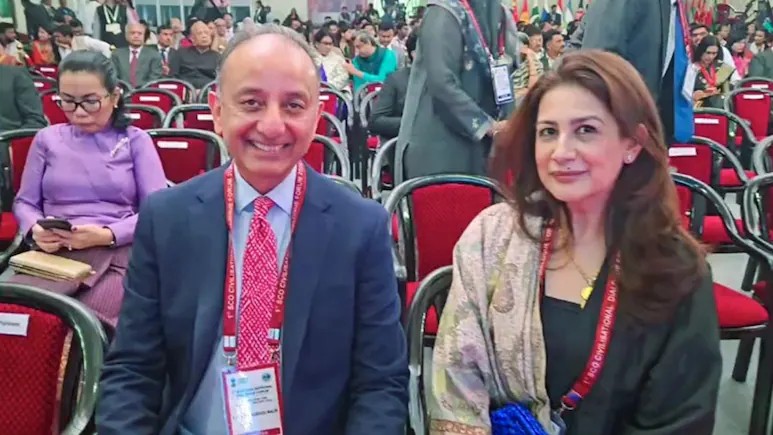
More cultural engagement between India and Pakistan can open new avenues for dialogue between the two neighbours whose relations have remained strained since the Pahalgam terror attack in April 2025, Pakistan's Climate Change Minister Musadik Masood Malik has said.
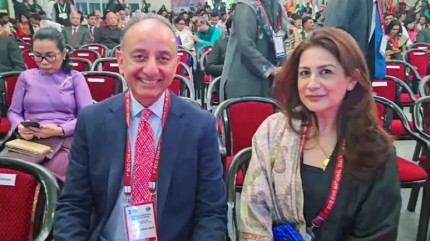
Culture had a key role in bringing countries together even when political differences prevented direct engagement, Malik said on the sidelines of the first Shanghai Cooperation Organization (SCO) Civilisational Dialogue Forum in New Delhi.
His comments come during the first visit by a Pakistani federal minister to India since former foreign minister Bilawal Bhutto Zardari attended a SCO meeting in Goa in May 2023.
The visit assumes significance in view of the existing diplomatic tensions between New Delhi and Islamabad, particularly after India put the Indus Waters Treaty (IWT) in abeyance after the Pahalgam attack that killed 26 people.
'Culture Has A Key Role': Pakistan Minister On India Ties
Malik said that he participated in the SCO forum largely on a multilateral basis and cautioned against viewing the gathering through the lens of India-Pakistan bilateral relations alone. "This forum is multilateral in itself. And you want to engage in multilateral discussions. Even the questions you have asked today have not been bilateral; everything here is happening in a multilateral context. We are here for multilateral talks as well," he told reporters.
But he said cultural exchanges could help in better understanding between the two countries. "Unless we understand each other, our way of thinking and our manners of living, we won't be able to grow," Malik said, adding that dialogue could help countries understand each other's perspectives.
He also spoke about the common historical ties between India, Pakistan, Russia, China and the Central Asian countries and said that cultural and civilisational interactions could provide avenues for regional co-operation.
The forum provides a platform for countries that do not engage often to share their views and get to know each other, Malik said.
He also hoped that such cultural events could be organised in future, with India and Pakistan hosting such gatherings in each other's countries to promote people-to-people contact.
Asked whether relations between India and Pakistan could improve after the forum, Malik said he was hopeful that the regional relationships would move forward. "I think all our relationships will improve. The region is in flux, and the geopolitical playing field is changing very quickly," he said.
On terrorism, Malik said, "Pakistan has also suffered from terrorist attacks, and I agree that India has had several such incidents." He said the two countries should work for a lasting solution, not accuse each other.
However, the minister did not directly respond to questions about India's concerns regarding terror networks operating from Pakistani soil. Asked about Islamabad's position on cross-border terrorism on Friday, he first said that he would take up the matter in a statement later.
He also wanted to keep the discussion in the larger multilateral framework of the SCO, saying that the regional challenges were not just between India and Pakistan.
His comments on terrorism come in the backdrop of India's long-standing position that there cannot be any meaningful engagement with Pakistan as long as cross-border terrorism continues.
India Rules Out Change In Indus Waters Treaty Position
Malik spoke about cultural engagement and the need for dialogue, but New Delhi made it clear that there would be no change in its position on the Indus Water Treaty.
Responding to questions about the visit of the Pakistani minister and his earlier remarks regarding the agreement, Randhir Jaiswal, spokesperson for the Ministry of External Affairs (MEA), stated that India's stance has not altered. "Concerning the IWT, we have articulated our position very distinctly, and it continues to stand as such. There is no change whatsoever," said Jaiswal.
On April 23, 2025, a day after the Pahalgam terror attack that killed 26 people, India suspended the 1960 Indus Waters Treaty.
New Delhi said the treaty would remain suspended until Pakistan credibly and irrevocably stops supporting cross-border terrorism.
Malik had earlier made strong remarks over India's decision, including threatening that Pakistan would respond if India interfered with its share of water.
The latest MEA statement suggests that Malik's presence at the SCO forum has not led to any alteration in India's stated position on the treaty.
First Pakistani Ministerial Visit Since 2023
Malik arrived here on Friday to attend the inaugural SCO Civilisational Dialogue Forum, which is being held at the historic Purana Qila from November 20 to 22.
India has sent invitations to all the SCO member countries, including Pakistan, in line with the tradition of the multilateral grouping. Later, Islamabad confirmed Malik's participation.
The visit is important, as it is the first by a Pakistani federal minister to India since the visit of Bilawal Bhutto Zardari to attend the meeting of the SCO Council of Foreign Ministers in Goa in May 2023.
It also follows the military confrontation between India and Pakistan in May 2025, which came after India launched Operation Sindoor in response to the Pahalgam terror attack.
The first civilisational dialogue forum aims to promote cultural exchanges, historical understanding, and people-to-people ties among SCO members and other participating countries.
For New Delhi, the meeting is a multilateral engagement with all members of the grouping.