India Had 60-Day Energy Buffer During Hormuz Crisis, Ramped Up LPG Output To Tackle Supply Disruption: Hardeep Puri.

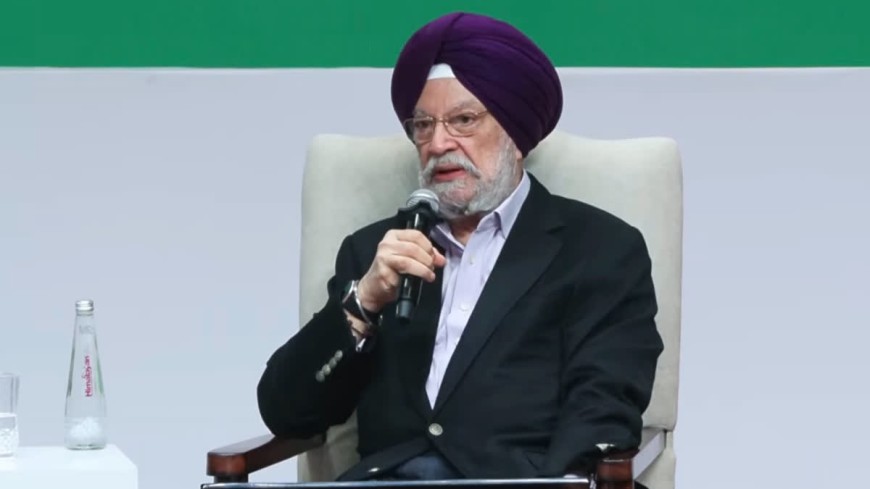
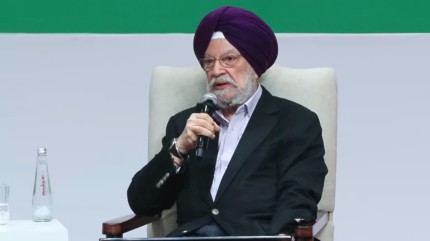
New Delhi: India was prepared to withstand even a worst-case energy supply disruption following the closure of the Strait of Hormuz on February 28, with the country having 60 days of crude oil and natural gas supplies, Union Petroleum and Natural Gas Minister Hardeep Singh Puri said on Thursday.
He said the government ramped up domestic LPG production, engaged with international suppliers and coordinated across ministries to prevent a disruption in supplies.
Addressing the FICCI AGM, Puri said the closure of the Strait of Hormuz, a critical global energy shipping route through which around 40 per cent of global energy supplies pass, affected countries across the world. However, India managed the crisis through what he described as a "whole-of-government approach".
The minister said the government had assessed a worst-case scenario in consultation with oil marketing companies (OMCs), including the possibility of domestic production coming to a complete halt.
"We sat with the OMCs and calculated a worst-case scenario, which is if our domestic production also were to stop. How many days' supply do we have? We reached the conclusion that even in the most difficult circumstances, we had 60 days' supply of crude and 60 days' supply of natural gas," Puri said.
He, however, identified LPG as the biggest challenge due to India's dependence on supplies from the Gulf region. Around 90 per cent of India's LPG imports came from the region, with Qatar, the UAE and Saudi Arabia among its major suppliers. In comparison, India's dependence on the region for crude oil and natural gas stood at around 40-50 per cent, he said.
To address the potential shortage, the government increased domestic LPG production from around 35,000 metric tonnes per day to 55,000 metric tonnes per day. Puri said the crisis also triggered panic buying, with daily LPG cylinder bookings jumping from 52 lakh before the conflict to 92 lakh during the disruption. The government subsequently took measures to bring down bookings, increase production and moderate consumption.
Highlighting the expansion of India's LPG distribution network, the minister said the number of LPG connections had increased from 14 crore in 2014 to 33 crore households. The country currently has around 1.07 lakh retail outlets, and none of them ran dry during the crisis, he claimed. "Today also, I can say with confidence that even if tensions exacerbate, we will be able to manage well," he said.
However, Puri cautioned that the global energy situation was "not entirely out of the woods yet", pointing towards continuing military activity and disruptions beyond the Strait of Hormuz, including in the Red Sea.
Recalling the challenges in securing energy cargoes during the crisis, the minister said India had to maintain round-the-clock engagement with suppliers and shipping stakeholders to ensure uninterrupted deliveries. "I describe myself as the supply management officer of the government. Because around the clock you had to chase cargos," he said.
He also pointed to multiple blockades and security challenges faced by vessels navigating the region, including restrictions imposed by Iran and the United States, as well as the laying of sea mines. "There were two choke points. There was a blockade by the Iranians and there was also a blockade by the Americans. So sometimes a cargo could get through one and get stuck before the other one," Puri said.
The minister also highlighted India's expanding refining capacity, contrasting it with the declining refining capacity in parts of the world. According to Puri, refining capacity in Europe was declining by around 2.5 lakh barrels per day, while several smaller and uncompetitive refineries in China were shutting down. India, on the other hand, was continuing to expand its refining infrastructure.
Puri also said the government has been continuously reimbursing oil marketing companies (OMCs) for losses incurred while ensuring uninterrupted fuel supplies, stressing that the exercise is an ongoing process and not a one-time compensation package.
Responding to a question on whether the ministry was considering a compensation package for the companies, Puri said OMCs were "good corporate citizens" and that the government was committed to supporting them amid mounting financial losses.
He pointed out that oil marketing companies were losing hundreds of crores of rupees every day while maintaining uninterrupted operations. Citing an earlier instance involving LPG, Puri said the companies had incurred losses of Rs 28,000 crore in one particular year, of which the government reimbursed Rs 22,000 crore.
The minister said the government did not want financial pressure to push these companies towards collapse, particularly as they also had responsibilities towards their shareholders. He added that reimbursing their losses was a continuous process to ensure their financial stability and sustain uninterrupted energy supplies.