Exclusive | 'Indian Space Companies Need To Join Hands, Build On Each Other’s Strengths': EON Co-Founder On MIRA Launch

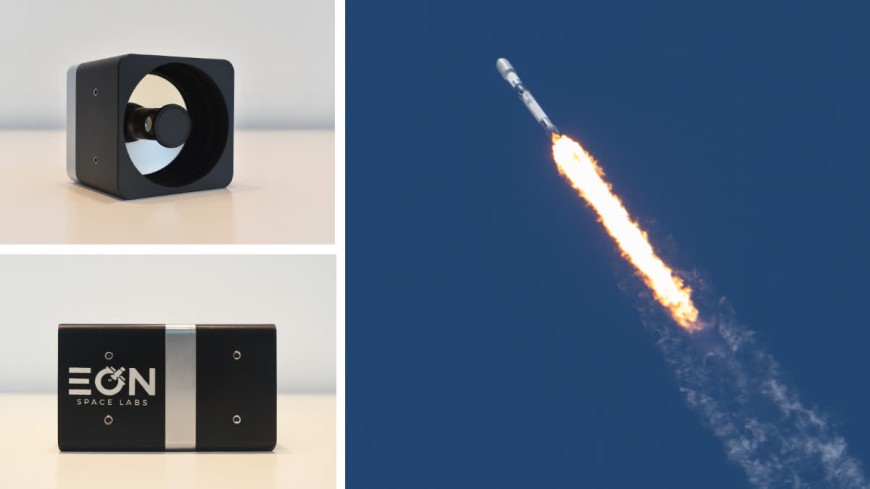
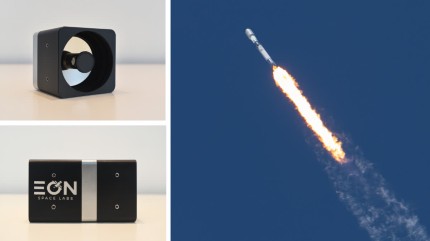
Hyderabad: Deeptech startup EON Space Labs’ MIRA multispectral Earth-observation payload reached last week aboard SpaceX’s Falcon 9 as part of the Transporter-18 rideshare mission. The launch vehicle lifted off at 12:02 AM IST on October 2 from Vandenberg Space Force Base, California, carrying around 130 payloads.
The 502-gram payload is designed to deliver approximately 9.2-metre Ground Sample Distance (GSD) imagery across nine spectral bands. MIRA uses EON’s indigenous monolithic optical architecture, built around a single piece of fused silica, to achieve a compact and rugged optical system.
MIRA is integrated with spacecraft which carries NVIDIA Orin NX-based onboard computing for in-orbit data processing. This enables selected image-processing and analysis tasks to be performed in orbit, reducing the raw data transmitted to the ground. EON expects to establish initial contact and receive the first images around October 10–14.
EON Space Labs develops indigenous, miniaturised imaging systems for satellites, drones, UAVs and ground platforms. The company is preparing for another MIRA flight opportunity with ISRO, with customers including OrbitAID and TakeMe2Space, and plans to raise around Rs 40 crore in a Series A1 round to expand globally and develop higher-resolution imaging payloads, including sub-4-metre and 1.5-metre-class systems for defence applications.
In an exclusive interview with ETV Bharat, Punit Badeka, Co-Founder of EON Space Labs, talked in detail about MIRA’s capabilities and EON’s vision for the growing Earth-observation ecosystem. The following is an excerpt from the interview:
Anubha Jain (AJ): MIRA weighs just 502 grams but is designed to deliver sub-9-metre multispectral imagery across nine bands. What was the key engineering breakthrough that allowed EON to achieve this level of capability in such a compact payload?
Punit Badeka (PB): Our team has worked on this for years, and now, seeing it leave Earth is a proud moment for us. We have developed MIRA as a miniaturised telescope-based imaging system for Earth observation from LEO (low Earth orbit). The key part of the design is that it uses a fused-silica optical architecture made from a single piece of glass. This helps us achieve a compact and mechanically stable optical design. For us, the challenge was not simply to make the camera smaller, but also to retain the useful information that we can capture from this single-piece optical system. This allows satellite manufacturers to achieve this level of image performance and resolution in a very compact payload.
AJ: MIRA is also integrated with onboard computing for AI-based processing. What kinds of image-processing or detection tasks can be performed in orbit, and how could this edge-AI capability change the way Earth-observation data is used commercially?
PB: The objective is not just to capture conventional photographs. MIRA uses different spectral bands, and each band provides different kinds of information that can be useful for agriculture, environmental monitoring, maritime surveillance, mining, infrastructure, and several other commercial Earth-observation applications.
At around 9.2 metres GSD, MIRA can be used for a wide range of applications, including agriculture, where wide-area monitoring is important. With onboard computing, selected image-processing and analysis tasks can be performed on the satellite itself, closer to where the data is generated. This allows us to identify relevant information from the imagery before transmitting all the raw data to the ground. It can reduce the amount of data that needs to be downlinked and make the process more efficient. Going forward, we will be developing systems with 4.5-metre and 1.5-metre GSD. From there, we will move towards sub-metre and even higher-resolution imaging capabilities.
AJ: What specific applications or customer requirements are you targeting with this combination of 9 bands, spectral capability and sub-9-metre resolution?
PB: The AI-at-the-edge component has been developed by TakeMe2Space, the company we launched with. They have developed the readout electronics, AI models, and multiple sensors that can provide farmers with analytics on crop health, soil health, and soil moisture. The same data can support several other applications, not just in India but globally.
Since our core expertise is capturing datasets from space, these AI capabilities can also be used for applications such as maritime surveillance. For example, we can track the movement of ships, which can be detected from space using this miniaturised payload.
The real advantage is that we control the imaging layer and can work with the data to build application-specific intelligence. This gives us the flexibility to develop application-specific solutions and actionable insights, rather than simply providing raw imagery. A 9-metre GSD is sufficient for covering large areas and providing situational awareness of activities taking place. For defence applications, however, we want to move towards higher-resolution systems, starting with 4 metres, followed by 1.5 metres and eventually even finer resolutions.
AJ: What are the next steps after you establish contact and receive the first images?
PB: The first step will be to validate the payload and assess its performance in orbit. We need to collect data and see what the system is actually delivering, including whether the AI is working as intended. We will compare the actual in-orbit performance with what we expected from our design and simulations. Since we have designed and developed the optical system, we will also assess the image quality, GSD and overall optical performance, and identify areas where we can further improve the system. We will also explore whether we can further reduce the weight from the current 502 grams while maintaining the image quality.
We have already conducted extensive testing of the product on the ground, both in the field and in laboratories. The in-orbit data will now help us identify any gaps and areas where we can further improve the system.
AJ: How will the learnings from MIRA feed into EON’s planned higher-resolution imaging payloads, including the sub-4-metre and 1.5-metre-class systems?
PB: Further reducing the size and weight is a key part of our work. We want to integrate not just the optics, but the sensors and the entire optomechanical system together while keeping the overall payload compact and lightweight.
The in-orbit performance of MIRA will give us valuable inputs for the next generation of systems. We will use the actual data and identify any gaps between our design expectations and the performance in orbit. These learnings will help us optimise the optical design, surface finish and other parameters as we move towards higher-resolution systems. What we learn from MIRA will directly feed into the next designs, first the sub-4-metre system and then the 1.5-metre class, while continuing to reduce the size and weight of the overall payload.
AJ: With India opening up its space sector to private players, what needs to happen next, in terms of infrastructure, funding, data, regulation, and customers for Earth-observation startups to move from technology demonstration to sustainable commercial operations?
PB: India now has a strong space ecosystem, with startups working across rocket and satellite manufacturing, payloads, and Earth-observation data and analytics. Many have already demonstrated their technologies in space.
The government’s proposed PPP model can help bring these capabilities together. Government agencies and states can work with multiple startups to use space-based data for applications such as agriculture and other commercial applications, providing regular, near-real-time information that can support users while creating revenue opportunities for companies. Launch access is another key factor. Companies such as Skyroot are working towards more frequent launches, which will allow satellite and payload companies like us to get into space more regularly. Otherwise, it can take years for a startup to raise the required funding and get a payload into orbit.
Our collaboration with TakeMe2Space is one example. Rather than waiting six to eight months for a launch opportunity, we joined hands to get our technology into space and demonstrate India’s capabilities. We have already had two orbital flight opportunities for MIRA and have plans for several more. We want to help the Indian ecosystem launch payloads more frequently, ideally within weeks. The ability to design and manufacture MIRA in India also allows us to deliver a flight-ready payload in around four to five weeks, compared with the typical six-to-eight-month lead time for imported payloads. This gives customers shorter timelines, greater flexibility, and technical support.
We are also working with Bengaluru-based Kepler Aerospace to develop payloads for satellite constellations. The idea is simple: each company focuses on what it does best. Establishing MIRA’s flight heritage will also give satellite manufacturers greater confidence to work with us. There is also significant export potential. We have already received interest from European markets for our miniaturised payloads, with potential requirements running into hundreds of units. This interest shows the global opportunity for Indian space startups. The key is collaboration. Rather than trying to build everything independently, Indian space companies need to join hands and build on each other’s strengths. That is how Indian companies can build high-quality space products for the global market.