'Dialling The Wrong Number': Supreme Court Refuses Plea For Rotation Of SC/ST Reserved Seats

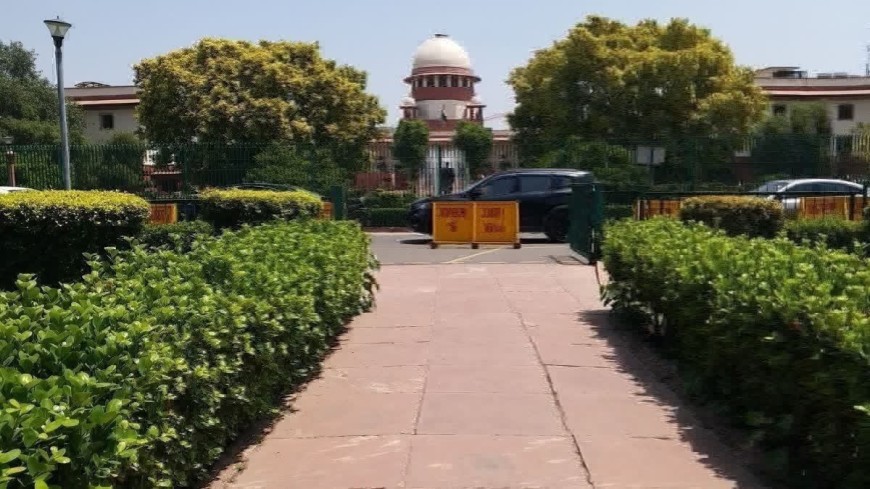
New Delhi: The Supreme Court on Wednesday told the petitioner that the demand for mandatory rotation of seats reserved for Scheduled Castes (SCs) and Scheduled Tribes (STs) in Parliament and state assemblies was not for judiciary rather a matter for the legislature.
In a lighter vein, Chief Justice of India Surya Kant told the petitioner he was "dialling the wrong number" and quipped that this was a " season of protests, dharna, and naarebaazi".
A bench led by CJI and comprising Justices Joymalya Bagchi and V Mohana suggested the petitioner approach elected representatives to build consensus for a change in law.
The top court refused to interfere with an order passed by the Allahabad High Court. The top court upheld the validity of Section 9 (1)(c) of the Delimitation Act, 2002. This provision requires reserved constituencies to be identified in areas where the proportion of SC/ST residents is comparatively large, and it does not mandate periodic rotation of such constituencies.
Justice Bagchi said the court cannot rewrite the Constitution on the schedule, and we can strike down a provision, we can read down a provision, but we cannot rewrite it by saying introduce rotation in respect of reservation. The bench said it is for the legislature to examine this aspect.
The CJI observed that the delimitation exercise is not a continuous process and it is a one-time exercise. “So, for example it is done in 2010. Guidelines are expected to be followed when next time it happens. But Delimitation itself is a legislative exercise," observed the CJI.
The bench observed that whether reserving constituencies based on a higher concentration of SC/ST populations entrenches caste divisions is a matter for the legislature, not a ground to strike down the law as unconstitutional.
Citing the provision, the petitioner’s counsel argued that constituencies for SCs must be distributed in different parts of the state and seats should be reserved for SCs in constituencies where the percentage of the SC population relative to the total population is comparatively large.
"Therefore, while working out the allocation of total number of seats for each district as mentioned above, the number of seats to be reserved for SCs in those districts will also have to be worked out separately. Subsequently, SC seats will be reserved in those constituencies in the district in which so far as practicable, the percentage of their population…”, argued the counsel. The CJI said it does not talk about rotation.
The bench added, "Without a statutory framework for rotation can we mandate the authorities—the Delimitation Commission or the state—to rotate the reserved seats for SCs/STs?" The bench asked if the counsel could make a representation. The counsel said nobody was listening to him.
The CJI observed, “In a political democracy, where there are multiple political parties having their different kind of ideology. Voters are expected to vote for the party not for the candidate. Because you may like or dislike a political ideology, so who is representing the ideology becomes irrelevant. You vote for that ideology. So, that also defeat your argument.”
The bench also distinguished between the right to vote and any claimed right to contest elections from a particular constituency. The bench pointed out that general category candidates remained free to contest from unreserved seats.
The counsel said his representation had not been sent to the Parliament, so Parliament might at least apply its mind. The counsel argued that the same three or four families contest in rotation. Justice Bagchi said it does not become a constitutional question; it becomes a choice for the legislature and constitutional authorities to take an appropriate decision for rotation and thereby representation of different categories. “It does not impair the right to vote…”, he added.
It was argued that the HC acknowledged rotation would be an ideal arrangement but citing judicial restraint declined to issue directions. The bench asked the voters in constituencies with a larger SC population would necessarily vote along caste lines, and that reservation in such seats was therefore unnecessary.
The plea was moved by Jagdish Singh, an elector of the 191-Kadipur assembly constituency in Uttar Pradesh’s Sultanpur district. The constituency has remained reserved for SC candidates for nearly seven decades.