
Varanasi: A genetic study carried out by Banaras Hindu University (BHU) in collaboration with some international institutes has revealed that the Rohingya population has resided in the Arakan province of Myanmar for a thousand years.
According to the study, the Rohingyas trace their origins further back to Southeast Asia. The Rohingya population possesses approximately 41 percent Southeast Asian genetic ancestry, and in contrast, the Southeast Asian component is only about 31 percent among the neighboring Bangladeshi Muslim community, the study said.
The research was carried out at the initiative of the Government of Bangladesh, with geneticists and linguists from Estonia, Germany, and Italy collaborating with BHU and universities in Kolkata and Dhaka.
According to the study, “the most significant and striking aspect of this research is the presence of Southeast Asian admixture in the DNA of the Rohingya people.”
The study has revealed the interaction of the Rohingya with local Burmese communities in Myanmar.
As per the study, when the ancestors of the Rohingya began settling in the Arakan region of Myanmar (present-day Rakhine State), there was “genetic and social interaction” with the local Tibeto-Burman-speaking (Burmese) communities.
The lead author of the study is Prajwal Pratap Singh from BHU, while linguist Prof George van Driem also played a significant role in the research.
The study, which began in 2008, involved 12 scientists from various institutions, including BHU, the University of Dhaka (Bangladesh), the University of Tartu (Estonia), CDFD (Hyderabad), KU Leuven (Belgium), the University of Bari (Italy), Trinity College Dublin, the University of Calcutta, and the University of Bern (Switzerland).
According to researchers, this is the “world’s first comprehensive, high-resolution, genome-wide study of the Rohingya population.”
Gyaneshwer Chaubey, a geneticist at BHU, said that the study sheds light on the biological and genetic roots of the Rohingyas, who have faced displacement for decades.
“The study identifies the significant changes that have occurred in their DNA over time.”
Researchers compiled a dataset comprising 25 Rohingya individuals, 45 people from neighbouring regions, and 2,217 reference samples from across Eurasia to conduct an in-depth comparative analysis with permission from the Ministry of Disaster Management and Relief of Bangladesh,
The data were compiled under the supervision of Gazi Nurun Nahar Sultana from the University of Dhaka.
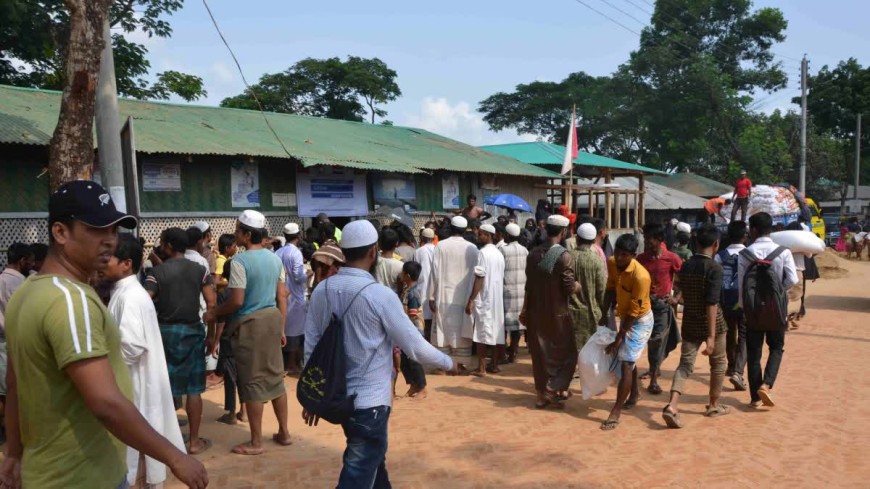
Researchers collected the DNA samples from refugee camps in Cox’s Bazar, Bangladesh, and the scientific analysis indicated that the primary genetic foundation of the Rohingya is South Asian.
The genetic findings mirror their linguistic affiliations, as the Rohingyas speak an Indo-Aryan language that is closely related to the Chittagonian dialect of Bengali.
The linguistic and genetic affinity, however, differentiates them from the surrounding communities, which primarily speak Tibeto-Burman or Austroasiatic languages.