
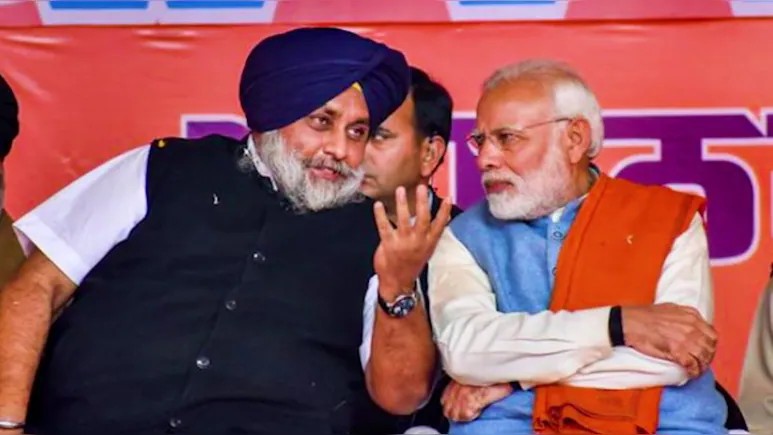
For the Shiromani Akali Dal (SAD), led by Sukhbir Singh Badal, the choice between reviving its alliance with the BJP and contesting the 2027 Punjab Assembly elections alone is a question of electoral survival as much as political identity. The party was reduced to just three seats in 2022 and subsequently lost another sitting MLA to defections. It managed to win only one Lok Sabha seat in 2024. That electoral decline now shapes every political calculation.
The Challenges For Shiromani Akali DalRe-establishing an alliance with the BJP would revive a partnership that lasted from 1997 to 2020. While it could help consolidate votes, it would also reopen wounds left by the farm laws. SAD walked out of the NDA in 2020, primarily to stand with protesting farmers. A return to the BJP fold could put the party at odds with rural communities, the farming community and agricultural unions, many of whom could view such a rapprochement as a betrayal of the 2020-21 farmers' agitation.
The alliance would also come at the cost of SAD's exclusive political space in Panthic politics. Radical and breakaway outfits, including Amritpal Singh's Waris Punjab De, could exploit the reunion by portraying the Badals as anti-Panthic and subservient to New Delhi. Such a narrative risks further alienating SAD's remaining Jat Sikh support base.
The BJP, meanwhile, is no longer the junior partner it once was. Its growing vote share since 2024 has strengthened its bargaining position, allowing it to seek a larger share of seats and a more prominent role in Punjab politics. Accepting a subordinate position could further diminish SAD's traditional stature.
Waris Punjab De Can Be A SpoilerWaris Punjab De adds another layer of complexity to SAD's electoral calculations. Formally launched in January 2025, following Amritpal Singh's 2024 victory from Khadoor Sahib while lodged in Dibrugarh jail under the National Security Act (NSA), the outfit has sought to appropriate the Akali Dal's political legacy while targeting the Badals over religious and Panthic issues. It raises the 2015 sacrilege incidents, the Behbal Kalan firing and the Akal Takht's tankhaiya pronouncement against Sukhbir Badal.
Through his father Tarsem Singh and party spokespersons, Amritpal has focused on the release of former Khalistani terrorists called Bandi Sikhs who have completed their jail terms. He has also taken a hardline anti-drug stance. Analysts put its current statewide support at around 4 per cent, concentrated in the Majha belt (Khadoor Sahib, Tarn Taran, Ajnala) and pockets of Malwa. In a multi-cornered race, even a 5 to 10 per cent swing in rural seats can push SAD candidates from second place to third or fourth. If SAD reunites with the BJP, Waris Punjab De is positioned to absorb anti-BJP rural and Jat Sikh voters.
Sukhbir Badal's public description of the group as a "virus" and his accusations that it acts as a proxy for central agencies risk backfiring among younger Sikh voters. The outfit has appointed 28 district presidents, set up an ideology committee and drawn defectors, including rebel SAD MLA Manpreet Singh Ayali. It has also signalled interest in the long-pending SGPC general house elections, a direct challenge to the Badal family's institutional hold.
Akali Dal Waris Punjab De's electoral record so far rests on the 2024 Lok Sabha result and early projections for the 2027 Punjab Assembly elections. In June 2024, Amritpal Singh contested as an Independent from Dibrugarh jail and won the Khadoor Sahib parliamentary seat by 1,97,120 votes. In that segment, his campaign took roughly 37 to 40 per cent of the vote across the assembly segments ahead of candidates from Congress, AAP and SAD. Analysts and pre-poll trends put the party's core statewide vote share at around 3 to 5 per cent. A 4 per cent average looks modest on paper. The support is heavily concentrated. In the Majha belt, especially Tarn Taran, Amritsar and Gurdaspur districts, and in select pockets of Malwa, its local share rises sharply. In some rural constituencies, it is estimated to pull 15 to 25 per cent of the vote.
Can SAD Afford To Go Solo?Going solo would let SAD keep its regional identity and anti-Centre rhetoric. It would also expose deep limits. After the 2022 collapse and lost deposits in multiple 2024 Lok Sabha seats, the party's machinery, donor base and operational funds are stretched. A solo campaign is expensive to sustain. Historically, the alliance worked because SAD held rural seats while the BJP carried urban Hindu commercial centres such as Ludhiana, Jalandhar and Amritsar. Alone, SAD is nearly absent from those urban pockets. In a field that already includes AAP, Congress, the BJP and Panthic spoilers, a solo SAD risks being squeezed into a marginal third or fourth force in key districts. Internal dissension, groups such as SAD (Punar Surjit) and anti-Badal sentiment leave Sukhbir Badal's leadership exposed on the 2015 sacrilege issue and past governance without a partner to share the pressure.
The 2027 poll will be the first assembly election without Parkash Singh Badal, who died in 2023. Sukhbir has not matched his father's ability to hold factions together. Of the three MLAs elected in 2022, one defected to AAP and another to Waris Punjab De. The party's second-rung bench is thin outside pockets of Malwa. Recent local body polls and the Tarn Taran by-election showed anti-incumbency votes consolidating behind Congress rather than returning to the Shiromani Akali Dal.
Will SAD Tie-UP Help Or Hurt BJP?Reviving the old alliance offers complementary pools: SAD's rural Jat Sikh and agrarian votes alongside the BJP's urban Hindu and trading-class votes. Transfer has never been automatic. Urban and semi-urban Hindu voters loyal to the BJP have historically moved more easily to SAD candidates. Rural Sikh voters backed by SAD have often resisted voting for the BJP. Convincing cadres on both sides to work together after the 2020-21 split is a practical hurdle. Tying up with SAD also links the BJP to a party still under scrutiny for the 2015 sacrilege incidents and allegations of nepotism during its decade in power. That association can dilute the BJP's clean-governance and nationalist pitch.
Going solo lets the BJP build an independent identity. It also leaves clear gaps. The party has been stronger in urban and semi-urban hubs such as Jalandhar, Hoshiarpur, Ludhiana and Pathankot. Without SAD's rural network, it struggles to reach the villages that form the bulk of Punjab's 117 assembly seats. It lacks a mass-based Sikh leadership pipeline able to sway rural Jat Sikh constituencies on its own. In a crowded field with AAP, Congress, SAD and radical or breakaway Panthic groups, a solo BJP risks remaining confined to urban pockets. Anti-incumbency against the ruling AAP can fragment toward Congress or regional spoilers rather than coalesce behind the BJP. Pockets of rural Punjab still carry scepticism toward central agricultural policies. A solo campaign forces the BJP to face that hostility directly, without a regional partner to absorb or buffer community-level pushback
Outcome Of An AllianceWould an alliance translate into a higher combined vote share? On paper, the arithmetic is encouraging.
In the 2024 Lok Sabha elections, when the two parties contested separately, the BJP secured approximately 18.6 per cent of the vote, while SAD polled around 13.4 per cent. Their combined vote share would have been close to 32 per cent, higher than that of either Congress or the ruling AAP in that election cycle.
The results underline the difference between expanding a vote base and converting it into parliamentary or Assembly seats.
Historically, the two parties drew strength from complementary constituencies. SAD brought rural Jat Sikh and agrarian votes, while the BJP contributed a relatively cohesive urban Hindu and trading-class support base. Bringing these pools together could create a stronger electoral foundation across the state.
But the arithmetic does not guarantee electoral success.
Years of political hostility following the 2020 farm-law split mean local workers may not transfer votes seamlessly. Traditional Akali voters could resist voting for BJP candidates, while urban Hindu voters who have embraced the BJP as an independent political force may hesitate to support SAD nominees.
The alliance could also trigger counter-mobilisation. Waris Punjab De and anti-Badal factions are likely to portray the reunion as an opportunistic compromise, attempting to draw away core Sikh voters from the Akali Dal.
A renewed alliance could, on paper, move both parties beyond their isolated electoral positions and make them more competitive against AAP and Congress. But whether that translates into Assembly seats will depend on how successfully they reconcile grassroots differences, manage seat-sharing disputes and prevent rival Panthic forces from exploiting the political fallout. The recent record shows no clear path from the numbers on paper to seats on the ground.