
New Delhi: India has emerged as a major contributor to the South-East Asia region's progress in tackling neglected tropical diseases (NTDs), eliminating three diseases during the 2021–2025 period, even as the World Health Organization (WHO) has cautioned that rising dengue and leprosy cases, persistent transmission of lymphatic filariasis and inadequate financing threaten the region's ambition of eliminating several NTDs by 2030.
According to the WHO’s mid-term evaluation of its global NTD road map for 2021–2030, eight countries in the South-East Asia region had eliminated at least one neglected tropical disease by December 2025. India led the regional achievements with three eliminations, while Bangladesh eliminated two diseases and six other countries eliminated one disease each.
India's major milestone was eliminating trachoma as a public health problem in 2024. The country also achieved the target for eliminating visceral leishmaniasis, commonly known as kala-azar, as a public health problem in all endemic blocks by 2023.
While Nepal achieved the visceral leishmaniasis elimination target in 2024, Bangladesh became the first country globally to receive WHO validation for eliminating the disease as a public health problem in 2023.
WHO’s regional assessment highlights that the combined efforts of mass drug administration (MDA), school-based deworming programmes, disease-specific treatment and strengthened surveillance have substantially reduced the population requiring interventions against NTDs.
Of the 21 NTDs prioritised by WHO globally, 16 are present in the South-East Asia Region, with all its 10 member countries affected by at least one disease.
The number of people requiring NTD interventions in the region declined from a peak of 1.024 billion in 2011 to 647 million in 2024. This represents a 36 percent reduction from the 2010 baseline and a 24 percent decline from 2020.
However, "the region must bring this number down to approximately 102 million by 2030 to achieve the global target of a 90 percent reduction from the 2010 baseline," the global health watchdog stated.
Lymphatic filariasis remains a major concern
Despite substantial progress, lymphatic filariasis remains one of the most significant elimination challenges, particularly for India, Myanmar and Nepal.
The number of people requiring preventive chemotherapy for the disease declined from 480.4 million in 2020 to 319.8 million in 2024. Meanwhile, treatment coverage among the targeted population improved from 43 percent to 82 percent.
Bangladesh and Timor-Leste achieved WHO validation for eliminating lymphatic filariasis in 2023 and 2024, respectively. Maldives, Sri Lanka and Thailand have also sustained their earlier elimination achievements through surveillance and morbidity management.
However, transmission continues in three countries, and reaching remote, migrant and marginalised communities remains difficult. WHO has also flagged emerging zoonotic brugian filariasis and diagnostic limitations as additional challenges.
Dengue and leprosy cases rise sharplyThe evaluation has raised particular concern over the rising burden of dengue and leprosy across the region.
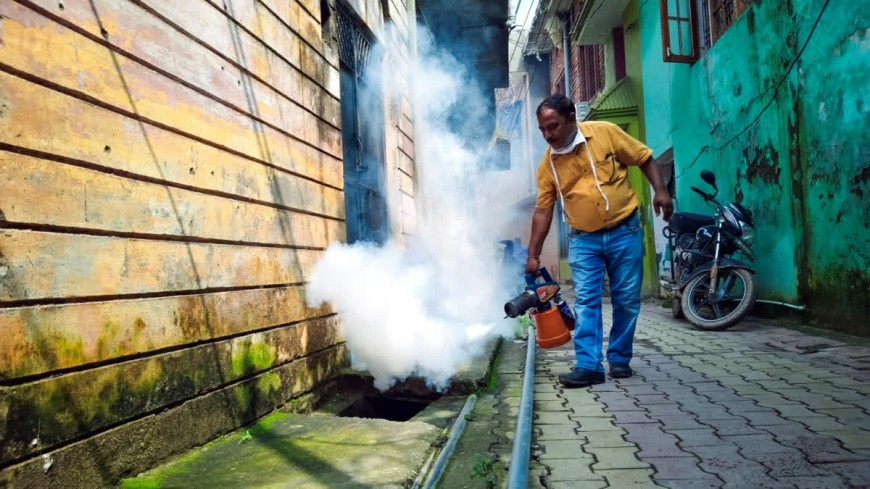
Reported dengue cases increased from 150,412 in 2020 to 541,419 in 2024, reflecting the growing impact of climatic variability, rapid urbanisation and inadequate institutionalisation of vector-control measures.
WHO has called for stronger surveillance, improved outbreak preparedness, community participation and multisectoral action to address the expanding threat.
Leprosy cases rose from 74,514 in 2020 to a worrying 109,597 in 2024.
The high proportion of childhood cases and patients presenting with grade 2 disability indicates continued transmission and delays in diagnosis. WHO has identified the slow uptake of single-dose rifampicin post-exposure prophylaxis (SDR-PEP) as a missed opportunity to accelerate transmission reduction.
Another area of concern is rabies. Although reported deaths in the region nearly halved from 374 in 2020 to 178 in 2024, inadequate dog vaccination coverage, weak surveillance and limited coordination between human and animal health services continue to hamper elimination efforts.
According to the WHO report, snakebite envenoming, foodborne trematodiases, taeniasis, cysticercosis and echinococcosis also remain underreported and underfunded. “Limited access to quality antivenom is a particular concern,” WHO said.
Regional cooperation and India’s role
The WHO assessment highlighted India’s growing role in regional cooperation, particularly in cross-border disease elimination efforts with Nepal.
The WHO also highlighted a joint regional meeting between the two countries on malaria, visceral leishmaniasis and lymphatic filariasis focused on harmonising surveillance, timely referral of cases and synchronising mass drug administration in border districts.
“The region has also strengthened digital surveillance through disease-specific dashboards for dengue, leishmaniasis, leprosy and rabies. Multiplex serosurveillance and geospatial analytics are being increasingly used to improve disease monitoring and identify transmission hotspots,” it said.
The region’s integrated preventive chemotherapy index, which measures the delivery of preventive treatment against multiple diseases, recovered to 74 in 2024 after dropping to 48 in 2020 due to COVID-19 disruptions. It had reached 80 in 2015, while the global average stood at 59 in 2024, the WHO said.
Focus shifts to 2030 targets
For 2026–2030, WHO has called for accelerating lymphatic filariasis elimination in India, Myanmar and Nepal; completing visceral leishmaniasis elimination validation in India and Nepal; and strengthening interventions against dengue, leprosy, rabies and snakebite envenoming.
It has also stressed the need to sustain elimination achievements through continued surveillance, domestic financing and political commitment.
The evaluation warns that declining political attention and external funding after disease elimination could reverse hard-won gains. “Domestic health budgets remain inadequate to compensate for reductions in international assistance, particularly for high-burden diseases,” the WHO said.
The WHO evaluation was conducted with oversight from an independent committee of experts representing all six WHO regions, assessed 71 global indicators and incorporated inputs from more than 350 experts, programme managers, policymakers and partners.