
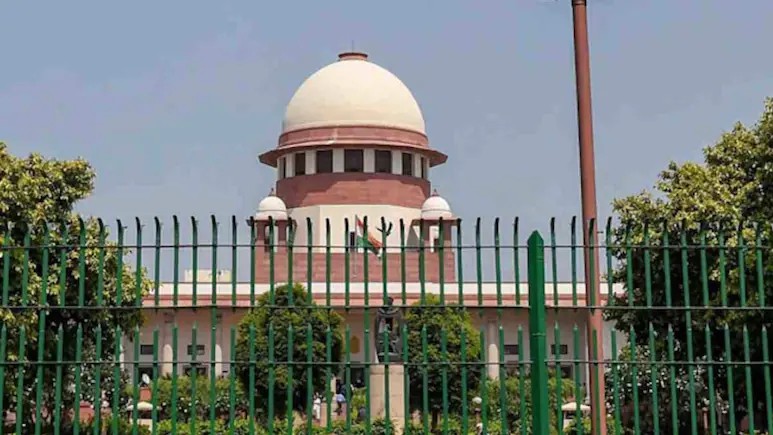
New Delhi: The Centre on Thursday informed the Supreme Court that it is considering forming a committee to review the University Grants Commission’s (UGC's) recently notified regulations, aimed at curbing caste discrimination in higher educational institutions.
The matter was heard by a bench, comprising Chief Justice of India (CJI) Surya Kant and Justice Joymalya Bagchi. Solicitor General (SG) Tushar Mehta represented the Central government before the bench, which was hearing a clutch of pleas against the UGC regulations.
During the hearing, Mehta informed the bench that the government is examining the issue. The bench observed that it is essential to protect every student's interest and ensure the younger generation is taken care of.
Mehta stressed that the examination aims to ensure no section feels dissatisfied or apprehensive, and that students' concerns are addressed. "Why don't you revisit the UGC Regulations?" asked the bench. Mehta submitted, “The government has taken a decision that every student should be taken care of. Nobody should have any apprehension.”
Mehta said the government is considering the younger generation's interests and contemplating appointing a committee. Taking note of Mehta’s submissions, the bench proceeded to defer the hearing in the case.
The University Grants Commission (Promotion of Equity in Higher Education Institutions) Regulations, 2026, were notified on January 13. They apply to all higher educational institutions in India.
The regulations were challenged before the Supreme Court for excluding 'General Category' students from complaining under its grievance redressal mechanism. Earlier this year, the Apex court ordered that the regulations be kept in abeyance.
The regulations require higher educational institutions to establish Equal Opportunity Centres and Equity Committees for effective implementation of policies and programmes for disadvantaged groups, and to enquire into discrimination complaints.
The petitioners’ have argued that regulations were exclusionary, as they deny grievance redressal and institutional protection to those not belonging to the Scheduled Caste/Scheduled Tribe (SC/ST) or Other Backward Classes (OBC) categories.