
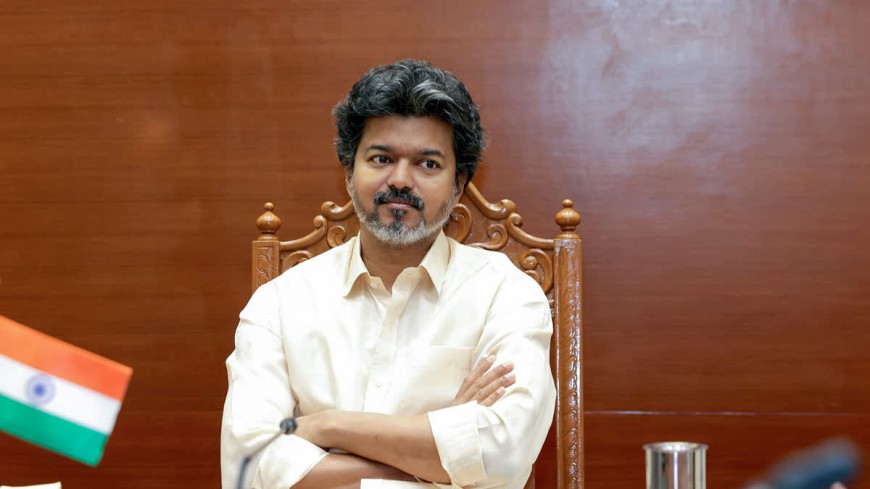
Chennai: Tamil Nadu Chief Minister C Joseph Vijay has written to Prime Minister Narendra Modi, urging the Union government to take steps to establish a permanent bench of the Supreme Court of India in Chennai.
In his letter, Vijay described the proposal as a long-standing demand of Tamil Nadu, first formally raised by the state government in 1980. He argued that a Supreme Court bench in Chennai would make access to justice easier for litigants from Tamil Nadu and other southern states, who currently have to travel to New Delhi to pursue remedies before the country's apex court.
Citing Article 130 of the Constitution, the Chief Minister pointed out that the Supreme Court can sit not only in Delhi but also at other locations appointed by the Chief Justice of India, with the approval of the President.
He also referred to discussions on the issue at the Conference of Chief Justices in 1979 and argued that Chennai, as a major metropolitan centre in southern India, would be a suitable location for a regional bench serving the southern states.
The letter highlighted the Madras High Court's legal legacy, noting that it was established in 1862 and is among the country's oldest High Courts. It also said that the Madras High Court Bar Association has the legal expertise and advocacy experience required to support the functioning of a Supreme Court bench in Chennai.
Access To Justice For Southern States
Vijay argued that the geographical distance between New Delhi and southern India places a considerable burden on litigants seeking remedies before the Supreme Court. Travel and litigation expenses, he said, make access to the apex court particularly difficult for people with limited financial resources.
Referring to Article 32 of the Constitution, the letter said the provision was intended to ensure that citizens could directly approach the Supreme Court to enforce their fundamental rights. However, the Chief Minister argued that the practical accessibility of this remedy has become increasingly dependent on geographical proximity and the ability to bear the costs of travel and litigation.
He maintained that a Chennai bench would help address this disparity and strengthen the federal character of the country.
The Chief Minister Vijay also referred to the Supreme Court Full Court resolution of August 7, 2007, which reportedly found no grounds to depart from its earlier decisions against establishing regional benches. He noted that the Tamil Nadu government had previously offered to provide the necessary infrastructure, including residential facilities for Supreme Court judges.
The letter further cited the Supreme Court's July 13, 2016, order in V Vasanthakumar vs H C Bhatia and Others, Writ Petition (Civil) No. 36 of 2016. The question of establishing regional benches was among the issues raised in the proceedings. The matter was referred to a five-judge Constitution Bench headed by the Chief Justice of India for consideration.
Vijay also cited recommendations made by parliamentary standing committees in 2004, 2006, 2008 and 2021, as well as successive Law Commission reports advocating permanent regional benches of the Supreme Court.
'Would Strengthen Federal Character'
Arguing that regional benches would not undermine judicial independence, the Chief Minister said the Chief Justice of India would retain full administrative control over them.
He urged the Prime Minister to reconsider the existing position on the proposal and take appropriate steps to facilitate the establishment of a Supreme Court bench in Chennai.
The letter said such a move would advance the constitutional principle of equal access to justice, reduce the geographical and financial barriers faced by litigants in southern India and reflect the federal character of the country.