
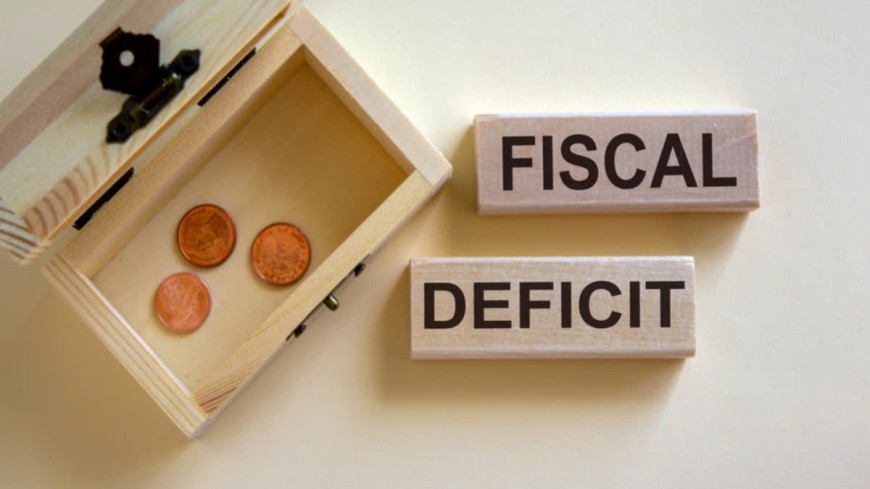
New Delhi: The Centre's fiscal deficit touched 42.1 per cent of the full-year Budget target in the first six months of the current fiscal year, according to government data released on Friday.
In absolute terms, the fiscal deficit, or gap between expenditure and revenue, stood at Rs 7,14,413 crore at September-end 2026, according to data released by the Controller General of Accounts (CGA).
In the year-ago period, the deficit was 36.5 per cent of 2025-26 Budget Estimates (BE).
The Centre has set a fiscal deficit target of 4.3 per cent of the GDP, or Rs 16.96 lakh crore, for 2026-27.
CGA showed that the central government's net tax revenue stood at Rs 12.76 lakh crore, or 44.5 per cent, of this fiscal's BE in September. The collection was 43.3 per cent in the year-ago period.
Copper prices will stay near record highs next year as new mines struggle to meet demand from power grids and data centres, according to World Bank forecasts.
The bank raised its 2027 copper estimate 18% from April to $13,000 per tonne, or about $5.90 per lb. Additional revisions include raising next year's tin forecast 22% to $45,000 a tonne and the zinc estimate 13% to $3,100. Conversely, gold is expected to average $4,250 per oz. in 2027, which is a 7.6?cline from this year.
“Commodity markets are being hit by several major shocks at once,” Ayhan Kose, World Bank’s deputy chief economist, said.
“Higher energy costs and trade disruptions are driving up prices across a broad range of commodities, threatening to worsen inflation, food insecurity and economic growth,” Kose added.
Food Prices To Rise
The World Bank in its October report projected food commodity prices to rise about 10% in 2026 and another 7% in 2027. It attributed the possibility of high prices to grain shipment disruption due to the Middle East crisis, El Niño impact, and high fuel and fertiliser prices. Overall commodity prices are forecast to rise 23% this year before declining by 7% in 2027.
The Middle East conflict has forced the countries to make adjustments on production and consumption of energy. The WB estimates global oil supply to slump 5.2% in 2026—the largest drop in more than four decades outside the 2020 global recession. “Consumption is expected to decline 2.5%, the third-largest annual contraction on record, after 2020 and 1980. High prices amid supply shortages are curbing demand, while electrification is also reducing oil use, particularly in China. Even so, production remains below consumption, forcing further withdrawals from oil stocks and leaving markets more exposed to renewed disruption,” the report stated.
Fertiliser prices
Fertiliser prices are projected to increase 14% in 2026, after a surge in urea prices early in the year that has since eased, before returning to 2025 levels in 2027.
The World Bank finds links between commodity-price volatility become more pronounced during periods of economic or market stress, including since the start of the current conflict in the Middle East.