
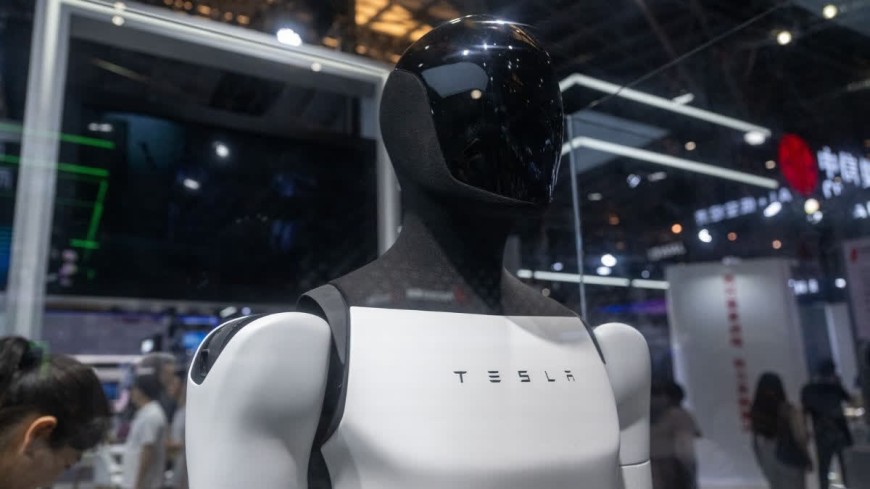
Hyderabad: Tesla has started manufacturing the Optimus humanoid robots on a production line in Fremont, California. It is a key step towards selling them. Chief Executive Officer (CEO) Elon Musk now aims to build 20,000 robots a week by the end of 2027.
The factory used to make electric cars, but Tesla has changed the space for its robot plans. This is the first time the firm has made Optimus units to production standards. However, mass production will need more engineering work and better factory efficiency.
Tesla shared the news in its third-quarter 2026 update for shareholders. Musk warned investors that output would grow slowly, as Optimus is a brand-new type of product for the company.
Tesla handles robot manufacturing
Tesla says it has setup a process that suits a commercial Optimus robot. Yet it expects to keep improving both its production methods and the robot's hardware as manufacturing expands.
On the earnings call, Musk called this phase early production. He warned of setbacks as engineers deal with the problems of building humanoid robots in large numbers.
Reliability is a major hurdle. Tesla wants Optimus to work safely for long periods without frequent repairs or broken parts. Musk admitted that engineers still need to improve the design of the robot to meet those requirements.
Software is another big challenge. Tesla says it must build the skills that let Optimus handle new tasks with confidence. Musk said much work remains before the robot can do a wide range of jobs on its own.
The plan to make 20,000 units a week is an ambitious target. To achieve it, Tesla would need a supply chain and factory system that can support steady output.
Tesla is also growing its computing power to support self-driving cars and robot development. It plans to reach 400 megawatts of training computing capacity by the end of 2026.
This will help build software for both its cars and Optimus robots. Tesla has also continued construction of the Austin fabrication facility, where equipment commissioning would begin in 2027.
The growth shows how much processing power is required to build smart machines. Optimus must understand its surroundings, plan its moves and carry out tasks in changing places.
Tesla has not said when Optimus will be on sale in large numbers. The progress is an important factory milestone, but what the robot can actually do is still a work in progress.
Battery supply problem
Computing power supports robots
Tesla's plans to go beyond robots. The carmaker says battery supply continues to limit how many vehicles it can build around the world. To ease this, Tesla is growing its battery work in several places. These include battery pack capacity in Berlin, cathode material and lithium refining in Texas, and lithium iron phosphate (LFP) cell making in Nevada.
Tesla has already shipped its first Megapack energy storage units built only with its own LFP cells. This gives the firm more control over a key battery technology in its energy storage business.
Output of its 4680 battery cells is also rising. These cells will help raise production of the Cybertruck and Tesla Semi, along with higher Model Y volumes.
The robotics push comes as Tesla faces pressure in its core automotive business. Third-quarter revenue was $28.04 billion, almost the same as $28.09 billion a year earlier. Profits fell by 43 per cent as costs rose with spending on robots, computing and self-driving.
Turning Optimus into a reliable product will take more than factory output. Manufacturing scale, battery supply, and software must all improve before the robots can meet Musk's ambitious production targets.