
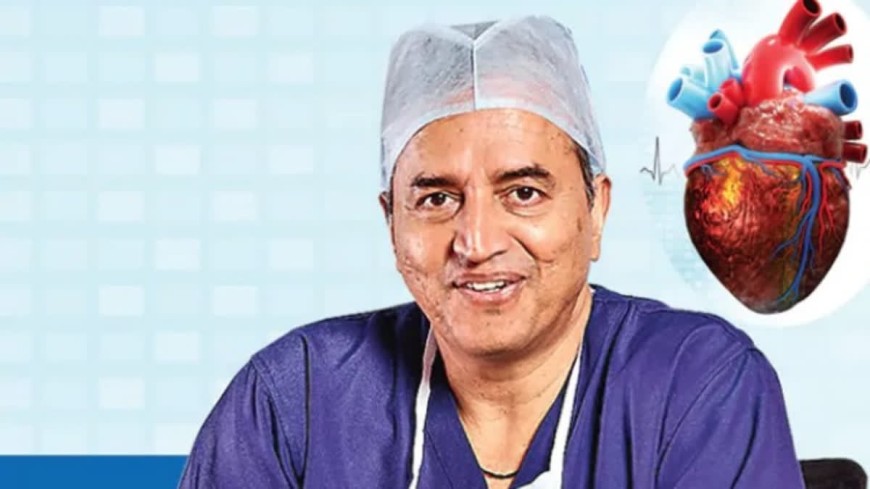
Hyderabad: Artificial intelligence (AI) can assess heart function with 92–93?curacy by analysing electrocardiograms (ECGs) and may help detect the risk of sudden cardiac arrest early, renowned cardiac surgeon and Narayana Hrudayalaya Chairman Dr Devi Shetty has said.
In an interview with Eenadu–ETV Bharat, Dr Shetty discussed the growing role of AI in healthcare, highlighting its potential to improve diagnosis, reduce medical errors and enable faster treatment through digital platforms.
He predicted that AI would play a crucial role in medicine over the next decade and could be a source of second opinions during treatment. However, he stressed that the technology cannot replace a doctor's judgment. “AI is smart, but the doctor is smarter,” he said, emphasising that the final decision on treatment must remain with the physician.
AI can help reduce medical errors
Dr Shetty said AI-enabled digital platforms could improve patient safety by alerting doctors to potentially dangerous prescriptions and treatment decisions.
For instance, if a patient with impaired kidney function is prescribed gentamicin, an antibiotic that can damage the kidneys, an AI-enabled system can flag the risk based on the patient's creatinine levels. Such alerts can help doctors reconsider prescriptions before medication is administered.
He said AI could help identify potential errors by analysing patient records and clinical information in real time.
Narayana Hrudayalaya has used AI for years
According to Dr Shetty, AI requires digital information and structured data to work effectively. While the human mind can typically process 10–15 data points at a time, AI can analyse 60–100 data points, helping doctors make more informed decisions.
Narayana Hrudayalaya introduced a digital platform eight years ago, with a team of 50 software engineers developing AI-based tools for clinical use.
Twenty doctors have access to an application that sends alerts when potentially dangerous bacteria are detected, enabling the medical team to respond promptly, even when some doctors are off duty.
The hospital also uses AI to interpret blood gas test reports, which are routinely conducted in intensive care units (ICUs). The results are sent to doctors and nurses through a mobile application, accompanied by AI-generated interpretations.
Dr Shetty said these tools help medical professionals understand complex reports and make quicker decisions. Rather than making doctors and nurses redundant, he argued, AI can enhance their capabilities.
He also suggested that obtaining an AI-assisted second opinion could become a legal requirement within the next five to 10 years.
AI could help predict cardiac arrest
Dr Shetty said certain warning signs, including an increased heart rate, falling blood pressure and declining urine output, may appear six to eight hours before cardiac arrest.
Identifying these warning signs requires analysing multiple parameters, making AI a potentially valuable tool in critical care.
His team has developed an application that uses ECG data to assess a patient's ejection fraction, a measure of how effectively the heart pumps blood.
According to Dr Shetty, the system analyses millions of ECG records alongside corresponding ejection fraction data. A study conducted by the team found that the AI tool could estimate ejection fraction with 92–93?curacy.
A low ejection fraction may indicate a serious cardiac problem and prompt doctors to conduct further tests.
Dr Shetty said AI-based cardiac monitoring could potentially help identify 70–80% of cardiac arrests in advance, describing it as a major development for ICU management.
Doctors must make the final decision
Despite AI's growing capabilities, Dr Shetty cautioned against relying on it blindly.
He explained that doctors may interpret the same medical evidence differently depending on their specialisation and clinical judgment. For example, a cardiac surgeon reviewing an angiogram may consider bypass surgery, while a cardiologist may initially explore angioplasty.
AI can provide additional insights and suggest alternatives, but it cannot make the final treatment decision, he said.
Dr Shetty also warned against doctors accepting AI-generated recommendations without critically evaluating them. Instead, medical professionals should understand the analysis and apply their expertise before deciding on a course of treatment.
AI access is limited in rural areas
Dr Shetty agreed that AI-based healthcare is largely concentrated in large hospitals that can invest in digital infrastructure and advanced platforms.
Hospitals without adequate digital systems may struggle to adopt the technology, meaning its benefits will take time to reach rural and smaller healthcare facilities.
He said the responsibility for treatment decisions and any resulting medical errors ultimately rests with the doctor, as AI is intended to assist medical professionals rather than replace them.
Electronic medical records can improve patient safety
Dr Shetty spoke about the importance of electronic medical records (EMRs) in preventing delays and reducing medical errors.
He said that even hospitals in the United States face the risk of errors when treatment decisions rely on paper-based records or when critical information fails to reach doctors promptly.
For example, a blood test may reveal a potentially dangerous bacterial infection just as a nursing team's shift ends. If the report is not communicated promptly to the incoming team and the treating doctors, treatment may be delayed.
Infections caused by bacteria such as E. coli can progress rapidly and can make timely intervention critical.
Dr Shetty said integrating AI with digital medical records could improve clinical decision-making, strengthen patient safety and support more efficient healthcare delivery.