
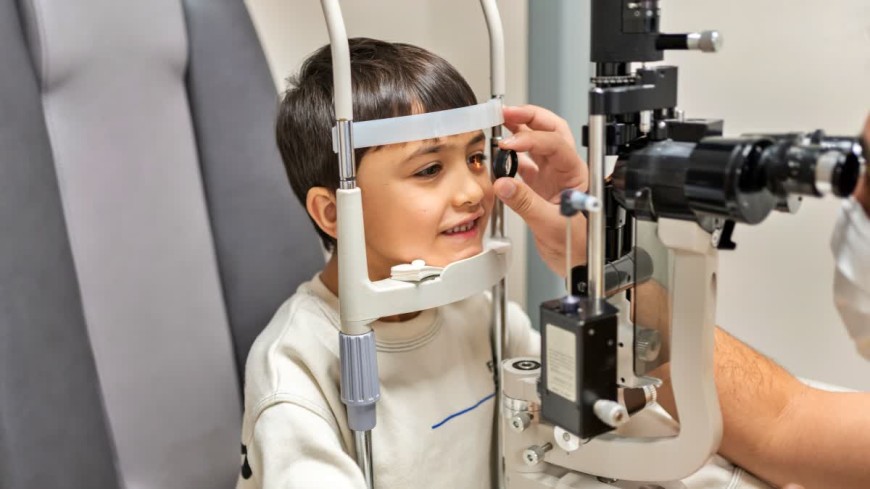
According to the International Agency for the Prevention of Blindness (IAPB), an estimated 45 crore children globally have eye conditions that need treatment, including approximately 9 crore children with sight loss. Early detection and timely intervention are critical because many childhood vision problems can be prevented, managed or treated. “Still, many challenges remain for providing children with access to quality paediatric eye care, such as difficulty in reaching specialized services, financial barriers, geographical accessibility, and limited awareness of early indicators of vision problems,” Ravi Ranganathan, Director – Programs, CBM India Trust tells ETV Bharat.
The repercussions can stretch far beyond a child’s line of sight. Untreated or undiagnosed eye conditions can impact motor, language, emotional and cognitive development and create barriers to education and social participation. A 2024 global study by IAPB and the Seva Foundation found that children with uncorrected refractive errors learn about half as much as children with good or corrected vision, a loss that screening and regular use of glasses could prevent. Childhood vision problems can be yet another financial and emotional strain for families.
Meeting these challenges, therefore, calls for a concerted effort among governments, healthcare providers, schools, families, NGOs and communities. A good place to start is with eye care for children. Vision screening with spectacles provided for children that need them is a proven approach that works, is relatively inexpensive and easy to scale.
IAPB estimates that in India, more than 3.4 million children have uncorrected refractive errors, which has serious consequences for their education and future earning ability. While government schemes like the National Program for Control of Blindness and Visual Impairment, and the Rashtriya Bal Swasthya Karyakram have contributed significantly to addressing eye health, there is still a lot to be done especially in the rural and remote communities.
Expanding access means providing eye care services closer to children and families and making screening and treatment affordable and accessible. The first step is to identify the children who need help. Door-to-door outreach campaigns and screening and awareness camps in villages, urban slums and schools ensure that children who may otherwise go unscreened are reached and help families recognize the early signs of vision problems. Training and supporting teachers, Anganwadi workers and frontline health workers to identify possible signs of vision problems and facilitate referral helps bring eye care closer to children and families.
The next step is to see that they get care. Vision centres in villages and towns or in health and wellness centres, bring primary eye care closer to families in rural and remote communities. They then work in conjunction with hospitals to ensure that children in need of surgery or spectacles, get them, either free of charge or at subsidized rates. Follow-up is equally important to ensure children continue to wear their spectacles and complete their treatment. Technology like tele-ophthalmology can take specialist care to communities far away from eye hospitals. Equally important is the need for eye health services to be accessible and inclusive of children with disabilities, as barriers to communication, mobility, information and service access can add to existing disparities.
Ultimately, safeguarding children’s vision depends on sustained collaboration between governments, healthcare providers and NGOs and investment in accessible, affordable and inclusive quality eye care. As we mark World Sight Day, it is worth remembering that something as simple as an eye test and a pair of glasses can have a lasting effect on a child’s ability to learn, develop and participate fully in society.